FACELIFT
Many would argue that the face is the most prominent feature of one’s appearance, making it a premiere focus of plastic surgery procedures and treatments. For those wishing to restore their youthful looks, eliminate wrinkles and diminish the appearance of jowls, fine lines and folds in the skin, facelift surgery is an ideal cosmetic option. There are many factors that can affect one’s facial appearance including over exposure to the sun, smoking, weight loss or weight gain, gravity, stress and personal genetics.
A facelift, also known as a rhytidectomy, is a cosmetic surgical procedure designed to tighten your facial and neck skin and underlying muscles to give you a smoother and more youthful appearance. Facelift surgery is performed by making very small incisions in the hairline near the temple and continues in front of the ear, around the ear lobe, behind the ear and then back into the hairline. For procedures in which the neck needs specific lifting, a small incision will be made under the chin. After the incisions are made the excess facial skin and underlying muscles are tightened, creating a smooth and refreshed appearance. After the lift is performed and the skin redraped, the surgeon will use synthetic stitches to close the incisions. Minimally invasive procedures with smaller access incisions for lifting of facial tissue in conjuction with fillers (fat, Radiesse or Restalyne) as well as minimal liposuction contouring of the neck can be done to restore a youthful appearance with lesser downtime and healing period. Each individual needs will be addressed and a variety of options will be based on their needs, available time for healing as well as finances.
Some patients may have to have a drain tube left in after their surgery to allow excess fluid to drain from the incision. The bandage will stay in place for about 1-2 days and you may experience some swelling in the first 24 to 48 hours after your facelift procedure. Your stitches will remain in until your one week follow-up visit. Although a facelift cannot halt the aging process, it can help in turning back the clock on your appearance, giving you a more youthful, refreshed look which can help give your self-esteem a major boost.
The best candidates for facelift cosmetic surgery are men and women who have the following characteristics: facial and neck skin that has begun to sag but still possesses good elasticity, a strong and well-defined bone structure, a well-defined jaw line, deep wrinkles in the cheeks and those with loose skin or excess fatty tissue in the neck. Ideal candidates for this procedure will also be in good emotional and physical health, do not smoke, have realistic expectations for their surgery and are well-informed of what the procedure entails and what to expect from the outcome. Since each individual has his or her own unique facial features, physical reactions and healing abilities, the results of facelift surgery vary with each patient and are never 100% predictable. Facelift surgery is also commonly combined with other cosmetic procedures such as eyelid surgery, forehead and brow lifts, facial implants and Botox treatments for a more profound rejuvenation of the face.
Before and after facelift pictures are here in our photo gallery.

RHINOPLASTY
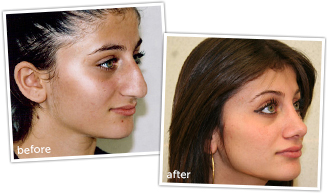
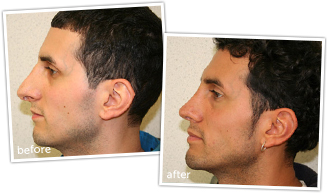
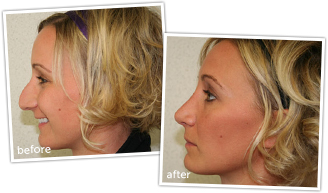
People choose to have rhinoplasty plastic surgery for a variety of different reasons. The majority of rhinoplasty patients are looking to resize or reshape the structure of their noses. A rhinoplasty procedure can also help individuals correct nasal birth defects and improve breathing problems, caused by the shape or internal structure of their nose. As the most prominent feature on the human face, the nose is a major contributor to facial balance and an attractive appearance. Also known as a nose job, a rhinoplasty procedure is an aesthetically and technically demanding operation by which small changes can make a dramatic change in your appearance.
Rhinoplasty plastic surgery is a set of highly requested procedures used to either correct nose related health problems or to reshape the nose for personal cosmetic reasons. This procedure can dramatically enhance your appearance by reducing or increasing the size of the nose, changing the shape of the tip or bridge, narrow the span of the nostrils or change the angle between your nose and your upper lip. Many people are not satisfied with the appearance of their nose and thus, their facial appearance, and choose to have a rhinoplasty procedure to regain confidence in their looks and feel more attractive.
A rhinoplasty is performed with the plastic surgeon first separating the skin of the nose from its supporting framework of the bone and cartilage. The Skeleton of the nose, i.e., cartilage and bones are sculpted to the desired shape and the skin is redraped over the sculpted framework. A plastic splint is placed over the bridge of the nose to maintain its shape. After the surgery is completed, a splint will be applied to help your nose maintain its new shape. Your surgeon will typically place a nasal packing or soft splints inside the nostrils to stabilize the septum and control some of the bleeding.
For the first twenty-four hours after your procedure, your face will most likely feel puffy, your nose may ache, you may experience a dull headache and there will be some swelling and bruising around the eyes. Nasal packing is removed within two days and the splint over the nasal bridge in one week along with any sutures. At that time you may return to work or school. Healing times will vary among patients, depending on each person’s health, surgery and physical condition. Most rhinoplasty cosmetic procedures are performed on an outpatient basis and general or local anesthesia can be used. Ideal candidates for rhinoplasty surgery will be seeking personal improvement, not perfection, and will be in good emotional and physical health.
View before and after rhinoplasty pictures.

ENDOSCOPIC FOREHEAD / BROW LIFT
An endoscopic forehead and brow lift is a procedure intended to elevate sagging eyebrows, remove deep frown lines and wrinkles and diminish the appearance of creases in the forehead. Recent developments in medicine and advancements in technology have made endoscopic forehead and brow lift plastic surgery a relatively simple procedure, giving patients long lasting results that uphold five to ten years or longer.
An endoscopic forehead and brow lift is performed by making small incisions in the hair line and on the temples to reduce any visibility of scarring. The lift is performed by inserting a special viewing instrument called an endoscope and carefully lifting the forehead skin so portions of muscle and excess skin can be removed. The plastic surgeon will remove any excess skin and close the incisions made with stitches or clips. The incisions will normally be covered with a gauze padding and the patient’s head may be wrapped with an elastic bandage. Bruising usually subsides within a week following surgery and vigorous activity should be very limited for several weeks, this including any activity that could significantly increase your blood pressure.
To get a feel for how an endoscopic forehead and brow lift will enhance your appearance, stand in front of a mirror and place the palms of your hands at the outer edges of your eyes, above your eyebrows. Gently raise the skin upward to raise the brow and forehead area. This procedure can significantly minimize the appearance of aging for years and give patients cosmetic satisfaction by eliminating the deep creases and fine lines that can make a person look angry, sad or tired, despite their mood or personality. For a more comprehensive facial rejuvenation, an endoscopic forehead and brow lift can be combined with eyelid surgery or a facelift procedure.
Endoscopic forehead and brow lift plastic surgery is normally performed on patients in their forties to sixties but can also be done to help people who suffer from inherited conditions, such as a droopy brow line or furrowed lines above the nose, affecting both their appearance and self-esteem. Most patients who choose to have an endoscopic forehead and brow lift did not realize how much their sagging forehead, frown lines and wrinkles contributed to an older looking appearance until seeing the results of a younger and more rested look.
See before and after browlift photos in our gallery.

OTOPLASTY (EAR SURGERY)
Otoplasty plastic surgery gives children and adults the opportunity to improve the appearance of their ears. This plastic surgery procedure is designed to pin the ears closer to the patient’s head, reduce the size of the ears or reshape one or both of the ears. An otoplasty procedure can result in more natural looking ears, helping them to look more normal, smaller and not stick out as much as before. This especially helps children feel better about the way they look and avoid being teased at such a vulnerable time in their lives. Although most patients for this procedure are children between the ages of four and six, adults can also have otoplasty plastic surgery, helping them improve their appearances and self-esteem.
An otoplasty procedure usually takes about 2-3 hours to perform and is done on an outpatient basis. Depending on the patient’s age and the extent of the surgery, local or general anesthesia is used. Adults are typically given local anesthesia, allowing them to be awake but relaxed during the procedure. To perform the corrective surgery, the plastic surgeon will begin by making an incision behind the ear to hide any evidence of surgical intervention. The surgeon will then sculpt the cartilage and bend it back toward the head using techniques of scoring, suturing, limited removal or combinations of the three. The reshaped framework is then repositioned to achieve the best balance with the opposite side and to reduce excessive projection. The skin is re-draped, any excess skin is removed and stitches will be placed to help maintain the patient’s new ear shape and to close the incision. A gentle pressure dressing is placed to prevent excessive fluid beneath the skin.
Most patients experience very little pain following their otoplasty procedure. Most will experience some slight discomfort or soreness and should avoid any activities for a few weeks in which the ear could be bumped. Most patients will notice some swelling in the ears for two to three weeks following their surgery. It is essential to the success of the surgery and personal satisfaction of the patient that he or she researches and fully understands what an otoplasty procedure entails and what to expect before having the operation.
Good candidates for otoplasty surgery have one or more of the following characteristics: large ears, protruding ears, lop ear (top seems to fold down and forward), cupped ear (condition in which the ear is very small), shell ear (when the curve is the outer rim, as well as the natural folds and creases are missing), large or stretched earlobes and earlobes with large creases and wrinkles. All of these conditions can cause a person to shy away from others, feel bad about the way they look and lose confidence in themselves as a person. Otoplasty surgery can dramatically enhance one’s appearance by fixing these deformities and give patients more normal and natural looking ears.
View before and after otoplasty / ear surgery pictures.

EYELID SURGERY
Eyelid surgery is a very positive and rewarding option for individuals looking to reduce the visible signs of aging. Time, gravity, over exposure to the sun and personal genetics can all cause the formation of wrinkles and fine lines around the eyes. These effects can cause one to look old, tired, angry or depressed. This condition is quite common because with time, the eyelid stretches, muscles weaken and more fat accumulates around the eyes. These areas are often referred to as “bags” under the eyes and droopy eyelids, making those affected look much older. This condition can also interfere with one’s vision, adding frustration to the situation.
Eyelid surgery, also referred to as blepharoplasty, is a procedure intended to improve the appearance of your eyelids. Ideal candidates for eyelid surgery will be in good emotional and physical health and have drooping, sagging eyelids with excess skin of both the upper and lower eyelids. Other common characteristics of eyelid surgery patients include bags under the eyes, laxity of the supporting eyelid structures with white showing below the iris or weakness in opening the eyes from the heavy excess of the upper eyelid. Also stretching of the muscles that elevate the upper eyelid can give one droppy eyelids.
Eyelid surgery is usually performed with sedation and local anesthesia. The plastic surgeon removes excess skin and fat and the lower eyelids are anchored on the outer corner of the eye to tighten the lower eyelid structure. This will provide support to the general area and create a smoother, more youthful appearance to the eyes. In addition any stretching of the muscles that elevate the upper eyelid is also addressed to provide full opening of the eye and a crisp, smooth upper lid fold. Recovery time for eyelid surgery is typically very short and patients usually go home the same day and are allowed to return to work a few days after the procedure. Bruising and swelling is normally very mild and sutures can be taken out within 3-5 days after the surgery. Healing will continue for several weeks after the procedure and will depend on each individual’s personal condition.
Eyelid surgery is frequently combined with minimally invasive cosmetic procedures such as brow lifts, forehead lifts and or a facelift to further improve the overall aesthetic appearance and balance of one’s eye complex. Eyelid surgery is one of the most frequently performed cosmetic procedures done today and helps thousands every year regain confidence in their appearances and feel more attractive in their own skin. It is essential to the success of your plastic surgery experience that you, as a patient, research and fully understand what your eyelid surgery entails including factors such as what the procedure can and cannot treat, inherent risks, costs, types of eyelid surgery and other related matters.
View before and after eyelid surgery pictures.

CHIN AND CHEEK IMPLANTS
Chin and cheek implants are designed to help bring the cheeks and chin into better balance with other facial features. It is very common to have chin and cheek implants in conjunction with a nose job (rhinoplasty). A chin augmentation, also known as a genioplasty, is the surgical use of sterile synthetics or biological implants to create a more balanced relationship between the structures of the face. Cheek implants, or submalar and malar augmentation, is the surgical use of sterile synthetics or biological implants to add fullness to the checks, helping patients restore their youthful looks and regain confidence in their appearances.
Two of the strongest characteristics to an attractive appearance are fullness of the cheeks and a well-defined chin. Flat cheekbones and a weak, receding chin can make the nose look larger and the face seem off-balanced. Facial implants can provide a more harmonious balance to your face and features, helping you regain confidence in your looks and feel more attractive about your appearance.
Ideal candidates for facial implant cosmetic surgery are in good physical and mental health, without any active diseases or pre-existing medical conditions. Most patients seeking cheek implant surgery have underdeveloped cheek bone structure or have lost tissue and the natural padding of healthy fat that normally occurs in the face. Desirable candidates for chin implant surgery will not have any bone disorders and not have been on Accutane for the last six months or more.
Facial implants are intended to augment areas of tissue deficiency secondary to either congenital deficiency or causes due to tissue laxity from aging. Chin or cheek implants can be placed in precise anatomic positions to enhance the chin or cheeks by making small incisions hidden inside the mouth, thus avoiding visible scars. Chin and cheek implants are commonly done in conjunction with facelifts, rhinoplasties and liposuction of the chin to give patients a more complete facial rejuvenation.
To perform a cheek implant procedure, the plastic surgeon will make a small incision close to where the implant will be placed. The incision is made either in the crease under your lower eyelashes or inside the mouth where your gums and lips meet. The surgeon will then create a pocket in the facial tissue and insert the implant and close the incision with stitches. For chin implants, the plastic surgeon may use some bone or fat from your body, silicon implants or a whole range of other synthetic or biological inserts which may even include specially prepared coral. The plastic surgeon will then insert the chin implant through a small incision under the chin or through the mouth, along the lower lip. Both procedures take approximately forty five minutes to an hour and a half to perform. Patients will typically experience minimal swelling or bruising with these procedures and healing is relatively quick

LASER SKIN CARE
We offer fotofacials for a variety of skin condition, microdermabrasion, laser hair removal as well as vein treatments in our Oakbrook facility.
INJECTABLE FILLERS (Quick Wrinkle
Treatments)
BOTOX® INJECTIONS
Botulinum toxin, or BOTOX®, is a biological toxin
that has been transformed into a therapeutic agent. It has long
been used to treat various neurological disorders. In recent years
it is being widely for treatment of frown lines, forehead furrows, "crows
feet" lines and wrinkles and certain other areas of the face
with hyperactive muscles that cause prominent lines or wrinkles.

FAT INJECTIONS
Fat injections are non-surgical cosmetic procedures that can help reduce various signs of aging. Also known as an autologous fat transplantation and mircrolipoinjection, a fat injection procedure in which fat is harvested from an individual’s own body and injected back into other various areas, can help patients achieve a more desirable figure and reduce the appearance of fine lines and wrinkles. With a fat injection procedure, a patient’s own body fat can be used as a graft to fill in depressions, deep lines (nasiolabial folds or smile and frown lines) and other areas on the face that need contouring.
Fat injections can help improve one’s appearance by filling in deep facial wrinkles and creases, plumping up creased and sunken areas of the face, adding fullness to the lips and cheeks and creating a better balance to one’s overall facial appearance. With these improvements, fat injections can dramatically enhance one’s appearance and help individuals regain confidence in their looks. And because fat injections use fat harvested from your own body, any form of allergic reaction is avoided.
To perform a fat injection procedure, fat is withdrawn from certain donor areas, either using a needle or through techniques similar to those used during liposuction. The removed fat is then treated through a centrifuge and injected back into the needed areas. The selected areas for the fat injections are overfilled with the patient’s fat to allow for absorption following the treatment. This will cause the patient’s face to appear puffy or swollen for a short time after the procedure. Fat injection procedures usually take about 30 minutes to an hour to perform, depending on the patient and the desired results.
It is important to remember that the results of fat injections are not permanent because eventually the body will reabsorb the fat. Fat injections are a positive solution to those who want a quick, easy procedure with a minimal amount of downtime. Desirable candidates for fat injection cosmetic surgery are in good physical and emotional health and are seeking personal improvement not perfection. Fat injections are a great way to restore one’s youthful looks and regain confidence in their appearance.

RESTYLANE
Restylane is the first and currently the only, dermal filler approved by the FDA that is made of a biodegradable hyaluronic acid. This acid is a naturally occurring substance present in all living organisms and provides fullness and volume to one’s skin. Restylane is a safe and natural cosmetic filler, immune to allergic reactions and short life spans due to its unique chemical composition. Restylane is primarily used to treat facial wrinkles and fine lines but is also used for lip augmentation and lip enhancement, reduce the appearance of lines around the mouth, modify nasolabial folds (under the nose), eye trough deformities and facial contouring of the cheeks and mouth.
Restylane is produced as a clear gel substance and is injected directly beneath the surface of the skin. The hyaluronic based gel serves to add natural volume and lift to one’s facial skin, resulting in smoother skin and a more youthful, refreshed appearance. Unlike other dermal fillers, Restylane permeates the dermal tissue and naturally binds to water molecules. Through this process, the modified water molecules assist in achieving and maintaining volume possessing a natural appearance. Restylane is eventually degraded by the body and dissolves without any residue or trace. The majority of Restylane patients experience results up to six months, depending on the patient’s age, skin type and other related factors.
Because of its natural composition, Restylane treatments do not require a skin test. Treatments usually take about 20-30 minutes to perform and treatments are done as in-office treatments. Ideal candidates for Restylane cosmetic treatments are 18 years of age or older and are in good physical and emotional health. Desirable candidates have realistic expectations for what Restylane can and cannot do, are mature enough to fully understand what the procedure entails and are seeking personal enhancement, not perfection.
Because of the extremely short amount of time it takes to perform and the incredible results it has to offer, Restylane cosmetic treatments have dramatically grown in popularity in recent years. It is essential, however, that prospective patients research and fully understand everything the procedure entails, what Restylane can and cannot treat, inherent risks and other related topics. Restylane is a positive option for individuals seeking physical improvement without having to undergo a surgical procedure.

RADIESSE
Radiesse is an injectable paste, typically used to enlarge lips and fill in folds and facial lines. The soft-tissue filler is a mixture of calcium hydroxylapatite (CaHA) powder, a basic substance of bone and teeth, and sodium carboxymethyllulose is used as a carrier substance. Radiesse cosmetic treatments are widely used in Europe and South America and available in this country for various medical conditions. Because it is does not contain any animal components, pre-allergy testing is not required when choosing to have Radiesse cosmetic surgery. Radiesse is made of components that are well-known to be biocompatible and the soft-tissue filler has an extensive record of safe clinical use.
Most patients enjoy long lasting results from Radiesse treatments, typically lasting two to five years. Over time the natural substance will slowly degrade and be removed by the body’s natural mechanisms. The skin around the area treated with Radiesse remains soft and natural to the touch and in most cases; minor follow-up treatments will help to prolong the natural, beautiful results created from the soft-tissue filler. Radiesse can dramatically enhance one’s looks by reducing the appearance of fine lines and wrinkles brought on by aging, over-exposure to the sun, gravity, smoking and genetics. Radiesse is also a positive option to getting fuller lips, helping patients feel more attractive about their looks.
Radiesse treatments can be used to reduce fine lines between the nose and mouth. This cosmetic procedure can also restore fullness to the lips and greatly diminish blemishes and acne scars. With Radiesse cosmetic surgery, it takes little time and almost no effort to successfully reverse the effects of aging, stress and gravity. Ideal patients will be in good emotional and physical health and begin their cosmetic surgery experience with a positive attitude and realistic expectations. Good candidates for Radiesse treatments are seeking personal improvement, not perfection.
Most Radiesse treatments take less than half an hour to perform and can be done as an in-office treatment, allowing patients to quickly return to their normal schedules and activities. Patients may feel some minimal discomfort but this will only be temporary following the treatment. Radiesse cosmetic surgery is a great way for individuals to restore their youthful glow and enhance their natural features.
Feel free to contact our office with any questions you may have regarding any of our facial cosmetic surgery procedures.